
If you want to reduce everyday chemical exposure and detox your home, you do not need to panic or replace everything overnight.
But it is smart to pay attention to a few common sources, especially indoor air, cleaning products, water, dust, and some plastics.
Any kind of body detox method is worthless if you don’t detox your home as well. It’s just an endless cycle of removing toxins while welcoming them right back into your body.
In this guide, I’ll show you the simplest home detox swaps that make the most sense first.
👉 In a Hurry? Start Here
- Fastest free win: take shoes off at the door
- Best home upgrade for asthma or allergies: improve indoor air and control moisture
- Most useful product swap: Use an air purifier or certified water filter if those are your weak spots
- Best budget detox move: switch to simpler cleaners and stop heating food in plastic
Why I Decided to Detox My Home
Common household and body care products have been found to have devastating health effects on the nervous and immune systems, our reproductive systems, and on our endocrine, cardiovascular, and respiratory systems.
Many of them have been proven to cause cancer.
While these toxins can be tolerated by us in small doses, all kinds of health problems emerge when we are exposed to them in combination or large doses.
The Highest-Impact Ways to Reduce Household Toxins
Some of these ways are easy. Just take your shoes off when you walk into your house. Others are more complicated and may need reaching into your wallet.
1. Take Your Shoes Off
Taking your shoes off at the door is one of the easiest ways to reduce the dirt, pesticides, and contaminated soil that get tracked into your home.
It is especially helpful in homes with kids, carpets, or anyone sensitive to dust and allergens.
Most household dirt, pesticides, and lead (!) come into your home through your shoes. All you have to do is declare your home shoes-free to eliminate more than half of your in-home toxins.
2. Keep the Air Clean
 When it comes to indoor air quality, the chances are you’re better off wandering the fume-filled streets of Hong Kong than sitting at home in front of the TV.
For example, home insulation doesn’t allow fresh air in, so you’re constantly breathing the same stale air. Carpeting is a huge source of dust and traps dirt, fleas, dust mites, and lead.
Try to keep your windows open as much as you can. Remove odors with baking soda, not with nasty chemical sprays. Clean your air ducts and vents with non-toxic cleaners.
Vacuum your carpets often, preferably with a HEPA filter Vacuum.
(HEPA filter vacuums capture the widest range of particles and get rid of allergens.
Portable Air Purifier
A portable air purifier is especially important for those of us with seasonal allergies, asthma, and general respiratory problems.
The best place to put a HEPA air filter is in your bedroom since that’s the room you use most (at least 7 hours of healthy sleeping, I hope). However, its portability allows you to drag it around with you to any room in the house.
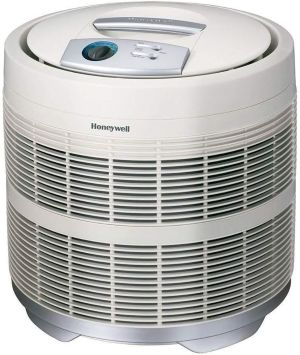
- Best for: allergies, asthma, pet dander, dusty bedrooms
- Skip this if: your main issue is mold from leaks or humidity, because a purifier will not fix the moisture source
A HEPA air purifier can reduce dust mites, mold spores, tobacco smoke, pollen, animal hair and dander, bacteria and viruses, and more.
It hardly makes any noise, it’s actually a relaxing white noise that helps me fall asleep at night.
The Honeywell HEPA filter, which I have, covers rooms up to 390 square feet in size.
Eliminate Mold
If you have mold, focus on fixing the moisture source first.
Then clean visible mold from hard surfaces using a homemade spray of Tea Tree Oil (about 8 drops) and water to kill mold without chemicals, dry the area well, and keep humidity under control so it does not return
👉 If you like simple multi-use ingredients, see my favorite ways to use tea tree oil around the house.
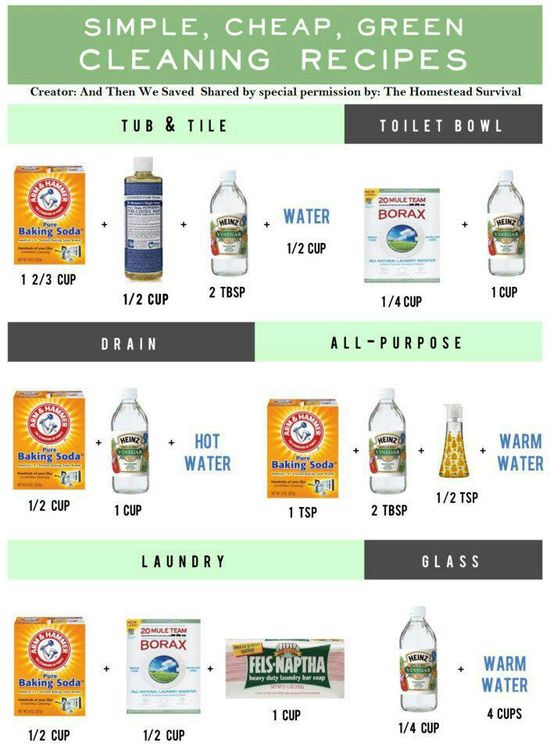
3. Use Natural Cleaners
The common industrial cleaning products we use to clean our bathroom, kitchen, furniture, and windows are loaded with toxic chemicals, and some of them do not even appear on the label.
You breathe these toxins in when you use them, and they pollute the air in your home for days.
Replace generic air fresheners, furniture polishes, laundry products, and household cleaners with non-toxic products.
You can also easily use basic ingredients you have in your home, such as white vinegar, baking soda, and hydrogen peroxide.
You can clean just about everything with this stuff just as effectively as with the industrial stuff.
4. Purify Your Water
This is a very important step in your home detox plan. Why? Because our body is 70% water. The water you put into it.
If water quality is one of your concerns, look for a filter that is certified for the contaminants you actually want to reduce.
Reverse osmosis systems can reduce a wide range of contaminants, but performance depends on the specific certification and model.
The same goes for carbon filters.
The 2 Best Water Filtering Options
After trying every water filter system on earth, here are my conclusions:
The 2-best water filtering options are Reverse Osmosis and Solid Block Carbon Filters.
Here’s why:
Reverse Osmosis – The Reverse Osmosis filter uses a membrane that removes many contaminants, along with Granulated Activated Charcoal to remove chlorine.
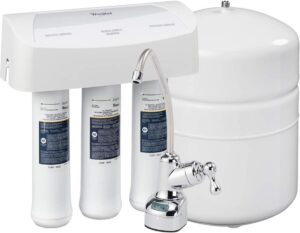
- Best for: people who know they want to reduce specific contaminants in tap water
This system is placed under the sink and has a holding tank.
The disadvantages of Reverse Osmosis are a waste of water (“rejected” by the filtering system) and the removal of some of the minerals from the water (but the system adds the missing minerals back into the water).
Though it removes fluoride and many contaminants, Reverse Osmosis does not filter pesticides and herbicides.
Solid Block Carbon Filters – quality carbon block filters will remove bacteria, chemicals, pesticides, heavy metals, nitrate, fluoride, and parasites.
They can even safely transform rainwater and seawater (!) into drinking water.
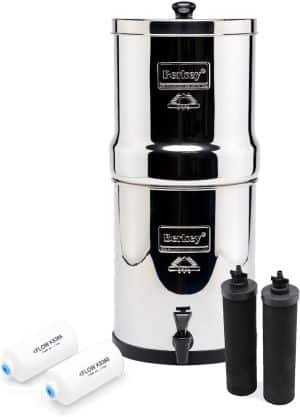
They do take up counter space, but on the bright side, they are the least expensive in the long run and require the least filter changes.
Also, they do not remove minerals from the water, which is a huge plus.
We have the most common type of these systems – the Berkey. It comes in many sizes (for different uses – home/office/travel) and in my opinion,n the best water filtering system today.
We have this size for our home and this size for travel. We have a lot of fun filtering rainwater with it!
5. Switch to Toxin-Free Cookware
First, the plastic. Bisphenol A, found in plastic items such as drinking bottles, causes reproductive-system defects in animals. And I can assume in us too.
Try to minimize the use of plastic in your home. Do not store food in plastic, do not heat food in plastic ever and plastic toys are not great either. At least stay away from children’s toys marked with a “3” or “PVC.
Freezing stuff in plastic is just as bad.
If you want to reduce kitchen exposures, the simplest move is to avoid overheating damaged nonstick pans and gradually shift your most-used cookware to options like cast iron, stainless steel, or high-quality ceramic.
Replace plastic storage containers with glass vessels and plastic drinking bottles with lightweight metal bottles.
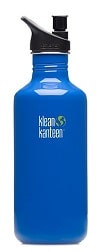
Since I don’t want my kids to drink BPA, I got them these stainless steel water bottles. I even freeze my homemade popsicles in stainless steel popsicle molds.
After long research, I’ve found these to be the safest and most convenient cookware options:
Ceramic Cookware & Bakeware
I am a great fan of X-trema cookware. They are easy to clean, heat evenly, hold flavors in food, and most importantly, do not leach anything into the food.
- Best for: your most-used pans, especially if your old nonstick cookware is scratched or worn
My favorites are the Extrema 11-inch skillet (which I use multiple times a day), and the 3.5 Quart Saucepan, which I use to cook soups, heat foods, and even bake in.
Cast Iron Cookware
As long as you don’t scrub it with soap and a Brillo pad, a high-quality cast-iron skillet can be a great non-stick surface.
It cooks evenly and with good flavor.
It can be used in the oven or on the stovetop, and we can all use the added benefits of extra iron provided by cast iron cookware.
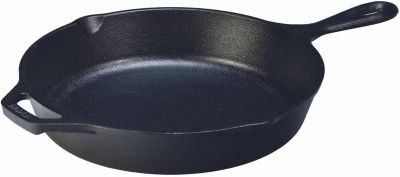
My favorite brand is the USA-made Lodge cast iron, especially my large skillet.
If you only replace one pan, replace the one you use almost every day.
6. Clean Your Bed
If you are sensitive to fragrance or finishing chemicals, untreated or simpler bedding fabrics may be worth trying, especially for children or anyone with sensitive skin.
Wrinkle-free and permanent-press textiles can involve chemical finishes, so this is a reasonable place to simplify if you are already replacing bedding anyway.
Try to avoid clothes with flame-retardants (children’s pajamas!!) due to the presence of PFCs.
I’ve just finished replacing all the bedding in my house with organic bedding for 2 reasons:
1. My 4-year-old son developed a rash from his new Spider-Man set. The rash was gone when I changed it to a white organic set.
2. I realized that my family and I spend at least 7 hours every day lying on chemicals, Formaldehyde being one of them.
If possible, replace your bedding with Organic Cotton Sheets, organic cotton mattresses, and organic cotton pillows, like this one.
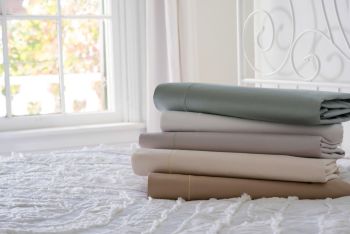
- Best for: sensitive skin, kids, fragrance-sensitive sleepers
- Skip this if: your mattress and bedding are not a current irritation issue, and your budget is tight
Also, if possible, encase mattresses, box springs, and pillows in dust mite barriers.
7. Switch to Natural Skin Care
Just like cleaning products, common beauty and body care products are filled with toxins and chemicals.
These penetrate your bloodstream easily through your skin and burden your immune system with more work.
It’s important to avoid unnecessary fragrance, heavily fragranced sprays, and products with ingredient lists that are much more complicated than they need to be.
Replace your beauty products with organic, all-natural ones, such as the Dr. Hauschka body & face skincare products (and makeup)
Use pure essential oils instead of perfume. Essential oils not only smell great but also offer some therapeutic benefits.
8. Avoid Industrial Pesticides
Of the 30 most commonly used lawn chemicals, 19 have studies pointing toward cancer, and 15 are known to cause nervous system poisoning.
Also, the pesticides we use in our gardens eliminate not only plant pests but also most of the insects that are beneficial in helping control these pests.
So, what’s a devoted gardener to do?
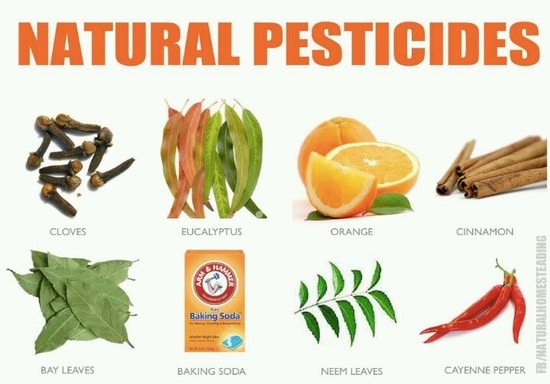
Source: Uploaded by user via Lynn on Pinterest
Avoid toxic pesticides and replace them with non-toxic ones. Avoid common termite terminators and conventional bug sprays, and make your own pesticides.
9. Detox Your Shower & Laundry Room
We’ve already covered body-cleaning and beauty products, so all you’ve got left is laundry and your shower curtain.
First, replace your plastic (with PVC) curtain with a cloth curtain.
When it gets dirty, just throw it in the laundry along with a few drops of Tea Tree Oil to disinfect it.
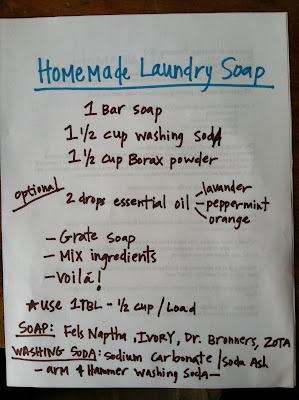
Replace all your toxin-filled laundry products with natural/homemade laundry products.
Making your own laundry detergent at home is one of the best decisions you’ll ever make.
It’s so much cheaper, it’s chemical-free, the clothes will still smell great, and they will last longer.
I’ve also switched to nontoxic toilet paper, because that is another surprisingly easy swap most people never think about.
10. Detoxify Your Pets
If you have pets at home, you can’t control the dirt they bring in from splashing around outside all day (and we love them so much that it’s worth it).

For pets, be careful with DIY flea remedies.
Some “natural” ideas, like vinegar, may smell unpleasant enough to repel fleas a little, but they are not a reliable treatment for an active flea problem.
If fleas are the issue, it is better to talk to your vet about safer, effective options
Finally, let’s not forget about emotional toxicity. If your home is filled with anger, jealousy, unhappiness, and stress, it will remain toxic even if you do all of the above.
What have you done so far to detox your home?
To your health and happiness,
Meital

Thanks! Such an informative article. I am going to try the make up! 🙂
Actually the system adds all the minerals filtered out back into the water as part of the service.
Reverse osmosis for water filtering? If this method is used should one not then be concerned about the trace minerals that are removed from the water?
Awesome article
What a great post! I am hoping to learn more about natural pesticides. My parents get an exterminator (they live in the Charleston area) mainly for the palmetto bugs. From our experience, there is no other way of getting rid of them!
Great post, thank you! Sharing. 🙂
Hi Meital, I just found your blog in VGN and I think this article is really great! Thanks for providing so many solutions for detoxing your home. I will share this post to help others.
Good information. Thank you!! We are working to detox our home and so many of those I do but many more I need to work on.