Cod liver oil is one of those old-school supplements that still gets talked about like a cure-all, but the most believable benefits today are much more specific.
If you are interested in cod liver oil for dry skin, a weak skin barrier, dry scalp, acne-prone or inflamed skin, or the nutrient side of hair health, there is a more useful way to look at it.
Cod liver oil provides omega-3 fatty acids plus vitamins A and D, and those nutrients all play roles in skin and hair biology. But it is also a supplement where too much can backfire, especially because excess vitamin A can be a real problem.
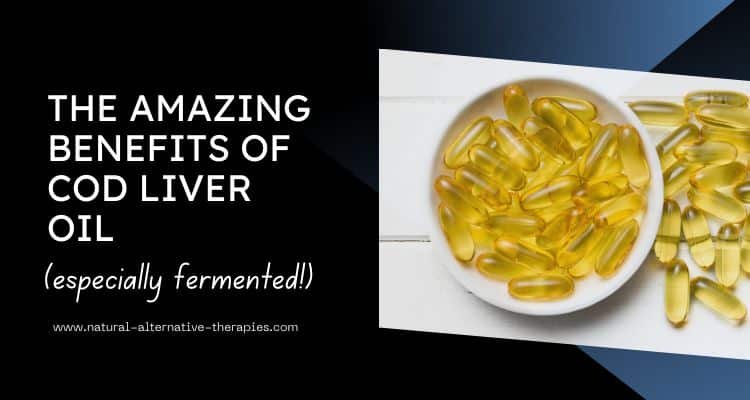
In this guide, I’ll show you the cod liver oil benefits for skin and hair that are actually worth knowing, what the science supports best, and how to choose a supplement without overdoing the vitamin A.
Key Takeaways
- Skin benefits – evidence supports dry, inflamed, or barrier-impaired skin through omega-3s and fat-soluble vitamins
- Hair benefits – evidence supports hair health when low omega-3, vitamin D, or vitamin A intake is part of the problem
- Best fit for – dry skin, dry scalp, inflamed skin conditions, and people with a diet low in oily fish
- Most important caution – more is not better, because excess vitamin A can be harmful and has even been linked to hair loss
If your main goal is healthier-looking skin and hair, cod liver oil makes the most sense as a nutrient support supplement, not as a magic beauty treatment.
What’s Special About Cod Liver Oil?
Cod liver oil is interesting for skin and hair because it combines omega-3 fatty acids with preformed vitamin A and vitamin D in one supplement.
Omega-3s are linked with anti-inflammatory effects and can support the skin barrier.
Vitamin A matters for skin cell turnover and immune function, while vitamin D plays a role in skin and hair biology too.
That combination is why cod liver oil is more interesting for dry skin, inflamed skin, dry scalp, and nutrient-related hair issues than many standard fish oils.
The catch is that cod liver oil also needs more respect than a basic omega-3 supplement, because too much vitamin A can be harmful, and over-supplementation has even been linked to hair loss.
Cod Liver Oil Benefits for Skin
1. Dry Skin and Skin Barrier Support
One of the best reasons to use cod liver oil for skin is dryness and barrier support.
Omega-3 fatty acids are thought to help regulate inflammation and may support the skin barrier, while vitamins A and D are also involved in normal skin function.
That does not mean cod liver oil is a miracle moisturizer, but it does make it a reasonable supplement to consider if your skin is chronically dry and your diet is low in oily fish or fat-soluble vitamins.
2. Eczema and Psoriasis
Cod liver oil is not a cure for eczema or psoriasis, but its omega-3s may be relevant because these conditions involve inflammation and barrier dysfunction.
Reviews of omega-3s and skin disease suggest a potentially helpful anti-inflammatory role, though the evidence is not strong enough to present cod liver oil itself as a proven treatment.
3. Acne-Prone Skin
Cod liver oil is sometimes discussed for acne because omega-3s may help with inflammation, and vitamin A is involved in skin turnover.
That said, acne is complicated, and cod liver oil is not the same thing as prescription vitamin A derivatives.
Cod Liver Oil Benefits for Hair and Scalp
1. Dry Scalp Support
If your scalp tends to be dry, tight, or flaky without being purely a product-buildup problem, cod liver oil may make sense as part of a broader nutrition-first approach.
That is mainly because omega-3s and fat-soluble vitamins support skin function in general, and the scalp is skin too.
2. Hair Health and Shedding
Cod liver oil is often talked about for hair because it contains nutrients that matter in hair biology, especially vitamin D, vitamin A, and omega-3s.
But hair loss is complicated, and cod liver oil is not a guaranteed hair-growth supplement.
It makes the most sense when low nutrient intake is part of the problem.
Also, too much vitamin A can contribute to hair loss, which is one more reason not to overdo it.
3. Hair Density and the Omega-3 Angle
There is some human research showing that nutritional supplements containing omega-3s, omega-6s, and antioxidants can improve hair density and reduce shedding in women.
The Most Important Thing About Choosing Cod Liver Oil
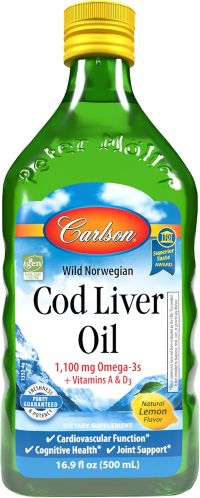
If you are using cod liver oil for skin or hair, the biggest mistake is thinking that more vitamin A automatically means better results.
It does not.
Cod liver oil can be useful, but it is also one of the supplements where dose matters a lot because vitamin A is preformed and can build up too high over time.
The NIH lists 3,000 mcg RAE (10,000 IU) per day as the adult upper limit from supplements and other preformed vitamin A sources.
So when you choose a cod liver oil, focus on:
- Clear labeling of vitamins A and D
- A dose that does not push you too high
- A brand that tests for purity and gives transparent nutrient amounts
For skin and hair support, I would much rather use a consistent moderate dose than chase the highest possible vitamin-A number.
Fermented vs Regular Cod Liver Oil
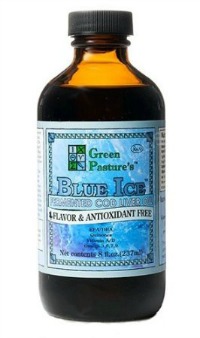
The main difference is that fermented cod liver oil is made through a slower, traditional fermentation process, while regular cod liver oil is usually extracted and refined more directly, so what matters most in real life is not the word “fermented” on the label, but how clearly the brand lists its vitamins A and D, purity, and dose.
Cod Liver Oil Dosage for Skin and Hair
If you are taking cod liver oil mainly for skin or hair support, think steady and moderate, not high-dose.
A small daily serving is usually enough to cover the “nutrient support” angle. There is no good reason to megadose cod liver oil for beauty.
This matters even more if you are pregnant, trying to conceive, or taking other supplements that already contain vitamin A, because high vitamin A intake can become risky.
The NIH advises people who are or may become pregnant not to exceed 3,000 mcg RAE (10,000 IU) of vitamin A daily from supplements and other non-food sources without medical guidance.
If you are already taking a multivitamin, vitamin D, or another fish oil, check the labels before stacking supplements.
Conclusion
If your skin tends to be dry, your scalp feels dry or flaky, or your diet is low in oily fish, cod liver oil can be a reasonable supplement to consider. But it is not something to megadose, and it is not a shortcut around good skin care, scalp care, or the rest of your diet.
For this supplement, the smartest approach is simple: choose a clearly labeled product, keep the dose moderate, and think long-term rather than dramatic.
To your health & happiness,
Meital
Studies
https://www.westonaprice.org/cod-liver-oil/cod-liver-oil-basics
https://science.naturalnews.com/cod_liver_oil.html