Stress can change what you crave, how you sleep, and how steady your energy feels.
No single food can erase stress, but the right foods can help support a calmer mood, steadier blood sugar, better sleep, and a healthier stress response over time.
This guide covers the best stress-reducing foods to eat more often, the foods that may make stress feel worse, and the simple daily habits that matter just as much.
(This post may contain affiliate links, at no extra cost to you.)
👉 In a hurry? Start with these stress-friendly foods:
- Salmon or sardines, if you want more omega-3s and a more satisfying meal
- Oatmeal if stress makes you snack or crave sugar
- Yogurt or kefir, if you want a gut-friendly breakfast or snack
- Beans and lentils, if you want cheap, steady comfort food
- Leafy greens, if you want an easy, everyday nutrient boost
- Pumpkin seeds or walnuts, if you want a simple stress-friendly snack
- Dark chocolate, if you want a small treat that still feels supportive
- Chamomile tea if evening stress makes it hard to wind down
How Stress Affects Your Body
When you’re stressed, your body releases hormones like cortisol and adrenaline to help you respond quickly.
That can be helpful in the short term.
But when stress drags on, it can affect sleep, digestion, appetite, mood, energy, and muscle tension.
It can also make you crave sugar, skip meals, or rely too heavily on caffeine.
Traditional systems like Chinese medicine also view stress as affecting digestion, tension, and overall balance in the body.
That’s where food can help. While no food can “fix” stress by itself, the right diet may help support steadier energy, better recovery, and a calmer overall stress response.
How Food Can Affect Stress, Anxiety, and Cortisol
Food can help during stressful times by doing a few simple things well:
- Keeping your blood sugar more steady
- Supporting gut health
- Giving your body enough protein, fiber, and healthy fats
- Helping you avoid the energy crashes that can make stress feel worse
In other words, stress-friendly eating is usually less about one magic superfood and more about building meals that leave you feeling more stable, nourished, and less wired.
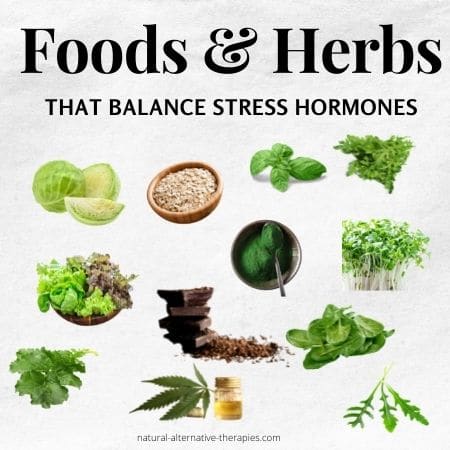
Foods and Herbs That Reduce Stress Hormones
When stress sticks around, your body benefits from regular meals, enough protein, more fiber-rich whole foods, and a diet built around nutrients that support brain, gut, and nervous-system health.
1. Green vegetables – Leafy greens and cruciferous vegetables like spinach, arugula, broccoli, cabbage, and sprouts are a simple way to add fiber and stress-supportive nutrients to your meals.
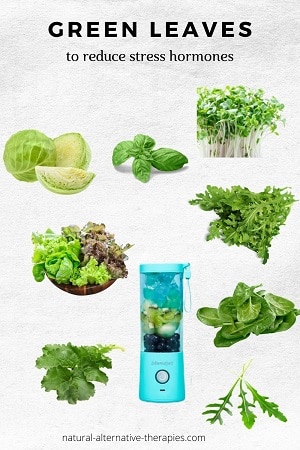
I just do a daily shake of greens with 1 banana to sweeten up this stress-relieving smoothie. I carry it around with me in my portable blender and make a fresh shake whenever I want to.
2. Salmon or sardines – Rich in omega-3 fats and protein, which may help support a steadier stress response and make meals more filling and satisfying.
3. Herbal infusions – Chamomile and Melissa nourish the central nervous system and glands. Chamomile is one of the better herbal options for stress because chamomile has been studied for anxiety symptoms.
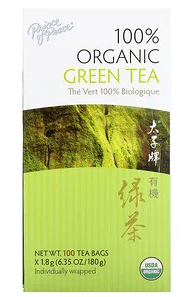
4. Green tea – contains L-theanine, which may help you feel calmer and more focused. It still has some caffeine, so it’s better earlier in the day and not ideal late at night if you’re already feeling anxious or having trouble sleeping.
5. Yogurt or kefir – These probiotic foods may help support gut health, which is closely linked with overall stress and mood regulation
6. Walnuts, chia seeds, flaxseed, pumpkin seeds –These give you healthy fats, fiber, and important nutrients that can help support a more balanced stress response. (study)
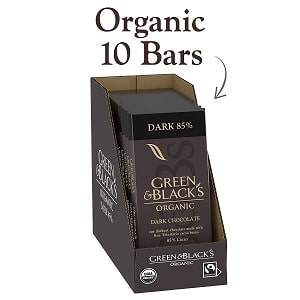
6. dark chocolate – Researchers found that eating the equivalent of one average-sized dark chocolate candy bar (1.4 ounces) each day for two weeks reduced levels of the stress hormone cortisol as well as the “fight-or-flight” hormones known as catecholamines in highly stressed people.
8. Eggs – provide protein and important nutrients, which can help keep meals more balanced and support steadier energy through the day
Avocado – provides healthy unsaturated fats and fiber, which can help support more stable energy and an overall stress-friendly eating pattern.
Beans and lentils – Fiber-rich comfort foods that help keep energy steadier.
The Best Overall Diet for Stress is Not One Magic Food
If you want the biggest real-world results, focus on a mostly whole-food pattern with vegetables, legumes, fruit, whole grains, nuts, seeds, olive oil, and fish.
Research shows that healthier overall eating patterns, including Mediterranean-style eating, are more likely to support mood and stress regulation than chasing one “cortisol-lowering” superfood.
Other Habits That Matter More Than Food Alone
Foods and herbs are important for coping with stress and supporting your mood, but “there’s no single food that’s going to do it all,” says integrative medicine doctor Yufang Lin, MD, who claims you have to look at the whole lifestyle picture.
1. Exercise is important for releasing accumulated stress and releasing endorphins that improve mood.
2. Acupuncture and Shiatsu treatments are very effective in releasing accumulated stress in the body and treating the energy regulation that contributes to improving glandular activity.
I have an acupressure mat that I use at home at least 3 times a week – for just 5 minutes.

3. Sleeping well – A bad night’s sleep or more prolonged sleep deprivation can lead to increased levels of cortisol in the bloodstream.
4. Simple Relaxation Techniques – Meditation, mindfulness, and even simple breathing exercises can help you deal with stress much more effectively. I love doing breathing exercises.
I use my Muse headband Meditation device every day – see my results!
5. Taking up a hobby – Hobbies can be a rewarding and satisfying way to lead a fuller and healthier life, and they can lead to an increased sense of well-being.
For example, studies have shown that gardening and reading led to decreased levels of cortisol.
It also seemed to improve the quality of life more than conventional occupational therapy.
6. Supplements – Some people also try supplements or herbal options like ashwagandha, rhodiola, lemon balm, or chamomile during stressful times.
These may help some people, but they’re not a replacement for sleep, regular meals, stress management, or medical care when needed.
8. CBD Oil – CBD oil is proven to relieve anxiety and stress while improving your sleep – a great way to break the vicious insomnia-stress cycle.
👉 See more ways to fight night-time anxiety – naturally.
Foods That Can Make Stress Feel Worse
Surprisingly, some foods can lead to a stress reaction in the body, just like a mother-in-law’s impending visit.
Here are the 5 worst foods and beverages to avoid when you are highly stressed:
1. Sugar – Sugary foods and drinks can cause faster blood-sugar spikes and crashes, which may leave you feeling more irritable, tired, or shaky.
2. Refined carbs -White bread, pastries, and ultra-processed snacks may fill you up quickly, but they usually don’t keep energy or mood steady for long.
3. Alcohol – may feel relaxing at first, but it can disrupt sleep and leave some people feeling more anxious or drained afterward.
4. Coffee – While caffeine is proven to be a mood-booster by stimulating dopamine activity, too much caffeine can make some people feel more jittery, raise their heart rate, and worsen anxiety, especially if they are already stressed or sensitive to caffeine.
5. Highly processed salty foods – Packaged, highly processed foods are often low in fiber and protein and easy to overeat when you’re stressed, which can leave you feeling worse instead of better.
Simple Stress-Reducing Food Swaps
- Instead of sugary cereal, try oatmeal with berries and pumpkin seeds
- Instead of chips, try walnuts or roasted chickpeas
- Instead of a second coffee, try green tea earlier in the day
- Instead of ice cream every night, try plain yogurt with fruit and a little dark chocolate
- Instead of skipping meals, try eggs on toast or a lentil soup
A Simple 1-Day Stress-Friendly Meal Plan
- Breakfast: oatmeal with berries, pumpkin seeds, and yogurt
- Snack: banana with walnuts
- Lunch: lentil bowl with leafy greens and avocado
- Snack: kefir or plain yogurt with citrus
- Dinner: salmon with rice and roasted broccoli
- Evening: chamomile tea and 1 to 2 squares of dark chocolate
How to Check Your Cortisol Levels at Home
As I mentioned, high levels of cortisol can lead to symptoms such as high blood pressure, a flushed face, muscle weakness, increased thirst, frequent urination, mood changes, irritability, weight gain in the abdomen and face, and bruises or purple stretch marks appearing on the skin, impaired brain function, and more.
You can easily check your cortisol levels at home with the EverlyWell at-home cortisol test, which measures cortisol, cortisone, melatonin, and creatinine.
These hormones affect your sleep cycle and stress response.
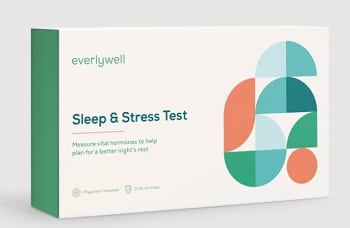
The sample is collected from the urine, and you get the results within days. The process is quick and easy.
Conclusion
Stress-friendly eating doesn’t have to be complicated.
Start with a few simple upgrades like more fiber, more protein, more whole foods, and fewer sugar crashes.
The biggest wins usually come from building steady meals around foods like oats, beans, greens, yogurt, seeds, fruit, and fish, then supporting that with better sleep, movement, and a few calming routines.
You do not need a perfect diet. You just need a few foods that help you feel more stable, nourished, and less overwhelmed.
To your health and happiness,
Meital
Studies
Young LM, Pipingas A, White DJ, Gauci S, Scholey A. A Systematic Review and Meta-Analysis of B Vitamin Supplementation on Depressive Symptoms, Anxiety, and Stress: Effects on Healthy and ‘At-Risk’ Individuals. Nutrients. 2019;11(9):2232. Published 2019 Sep 16.
Musty, Richard. (2006). Cannabinoids and anxiety. 10.1007/3-7643-7358-X_7.
Dymkowska-Malesa M, Walczak Z (2011) Supplementation in sport. Med News 80(3):199–204
Zellner DA, Loaiza S, Gonzalez Z, Pita J, Morales J, Pecora D, Wolf A (2006) Food selection changes under stress. Physiol Behav 87:789–793
Hepsomali P, Groeger JA, Nishihira J, Scholey A. Effects of Oral Gamma-Aminobutyric Acid (GABA) Administration on Stress and Sleep in Humans: A Systematic Review. Front Neurosci. 2020;14:923. Published 2020 Sep 17.